
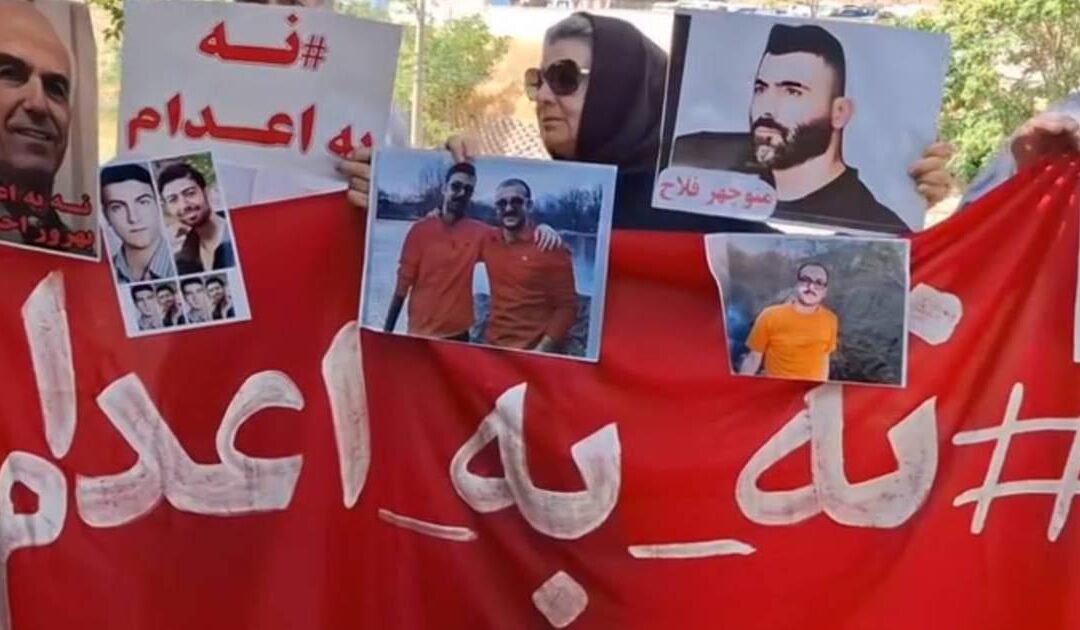
Prisoners in 66 detention facilities across Iran continue their weekly hunger strike against executions, drawing support from UN human rights experts and Canadian diplomats amid growing concerns over the use of the death penalty against political prisoners.
29 October 2026 | Iran Liberty
The “No to Execution Tuesdays” campaign, which originated at Ghezel Hesar Prison in Karaj, has entered its 144th consecutive week, with prisoners in 66 detention facilities across Iran continuing their coordinated 24-hour hunger strike against the death penalty.
The campaign has developed into a sustained act of protest by prisoners confronting the threat of execution and the use of capital punishment against political dissidents, protesters, and individuals accused of links to opposition groups.
The latest round of hunger strikes took place on Tuesday, 27 October 2026, as international concern over executions in Iran continued to grow. The campaign has also received expressions of solidarity from United Nations human rights experts and Canadian diplomatic representatives.
UN Human Rights Experts Join the Call for Solidarity
Several UN Special Procedures mandate holders have observed solidarity hunger strikes or announced their intention to participate, bringing greater international visibility to the prisoners’ demands.
Among them is Andrea Bolaños Vargas, UN Special Rapporteur on the situation of human rights defenders, who observed a 24-hour solidarity hunger strike on 27 October. https://x.com/AndreaBV_SR_HRD/status/2115207391658627502
In a further expression of support, Ana Lorena Delgadillo Pérez of the UN Working Group on Enforced or Involuntary Disappearances (WGEID) announced that she would join the solidarity hunger strike on Tuesday, 3 November.https://x.com/WGEID/status/2115249030360145945
Other UN mandate holders who have expressed solidarity with the campaign include:
- Leopoldo Maldonado, UN Special Rapporteur on freedom of opinion and expression. https://x.com/SRfreedex_LMG/status/2112200446320185639
- Gina Romero, UN Special Rapporteur on the rights to freedom of peaceful assembly and of association. https://x.com/Ginitastar/status/2109399063267520710
- Dr Mai Sato, UN Special Rapporteur on the situation of human rights in Iran. https://x.com/drmaisato/status/2109411677888532804
These expressions of solidarity highlight the international human rights concerns surrounding executions, the treatment of prisoners, and the protection of fundamental freedoms in Iran.
Canada Expresses Support for the Campaign

International solidarity has also extended to the diplomatic level. Canada has publicly expressed support for the “No to Execution Tuesdays” campaign, adding its voice to calls for greater attention to the situation of prisoners facing execution in Iran.
The growing support from UN experts and diplomatic representatives underscores the importance of sustained international scrutiny of Iran’s use of capital punishment, particularly in cases involving political prisoners and individuals charged in connection with protests or alleged opposition activities.
Rising Concerns Over Executions of Political Prisoners
The campaign’s continued action comes amid grave concerns about the escalating use of the death penalty in Iran.
According to figures provided by human rights advocates associated with the campaign, at least 46 political prisoners and protesters have been executed since 19 March 2026, while more than 100 others remain on death row. These figures underscore the urgency of independent monitoring and international efforts to prevent further executions.
Broadly defined capital charges, including moharebeh—commonly translated as “waging war against God”—have long been used in Iranian judicial proceedings involving political and security-related accusations. Human rights advocates warn that such charges can be used against dissidents, protesters, and people accused of affiliation with opposition groups.
The imposition and implementation of death sentences in cases involving political activity have prompted persistent concerns about due process, fair trials, and the potential use of capital punishment to suppress dissent.
Fears of a Repeat of Historical Atrocities
Human rights advocates have warned that the intensifying wave of death sentences and executions bears troubling structural similarities to the developments that preceded the mass execution of political prisoners in Iran in 1988.
The 1988 killings remain one of the darkest episodes in Iran’s contemporary history, with thousands of political prisoners executed following proceedings widely criticised by human rights organisations as grossly unfair.
While historical circumstances differ, advocates argue that the current pattern of executions, the growing number of prisoners on death row, and the targeting of individuals accused of political opposition demand urgent attention.
They warn that failure to respond promptly could leave prisoners facing execution without adequate international protection or effective scrutiny of their cases.
A Call for Urgent International Action
The 144th week of the “No to Execution Tuesdays” campaign coincides with the UN General Assembly’s Third Committee consideration of human rights issues relating to Iran.
Campaign supporters are calling on governments, international institutions, human rights organisations, and civil society groups to amplify the prisoners’ demands and press for concrete measures to prevent further executions.
They stress that expressions of solidarity must be accompanied by sustained diplomatic engagement, independent monitoring, and urgent action in individual cases where prisoners face imminent execution.
The campaign’s persistence across 66 detention facilities demonstrates the determination of prisoners to continue protesting despite the severe conditions in which they are held.
As international attention grows, the central demand remains clear: protect prisoners facing execution, end the use of the death penalty against political opponents, and ensure that human rights violations in Iran receive sustained international scrutiny.
For the prisoners participating in “No to Execution Tuesdays,” each weekly hunger strike is both a protest against capital punishment and an appeal to the outside world not to allow their voices to be silenced.
Recent Comments